AI-Aligned Legal Systems for Modern Practice
We integrate Responsible AI into legal ecosystems to streamline case intake, document handling, research workflows, and compliance tracking supporting legal teams with structured, transparent, and auditable digital processes.
 Overview
AI-Supported Legal Knowledge & Case Flow
AI enhances legal platforms by organizing information, coordinating procedural steps, and supporting research-driven work allowing firms and legal departments to operate with greater consistency while preserving professional judgment and regulatory alignment.
Talk With Experts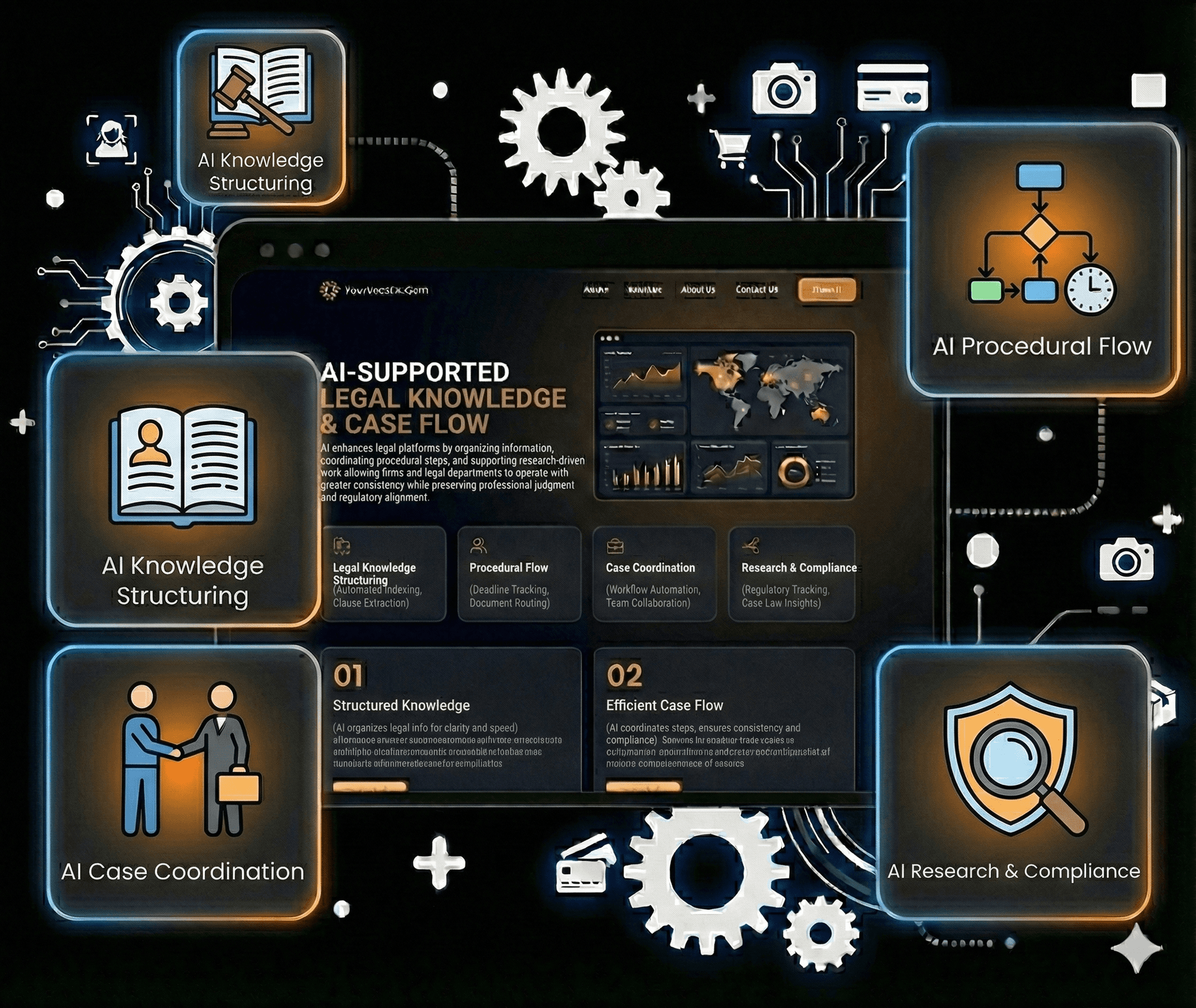 Case Study
What we have done
Turning Challenges into Measurable Success
Automated Clause Extraction System
Legal organizations handle contracts in multiple formats, including scanned PDFs, images, and legacy documents.

Cloud Architecture for Legal Technology Platforms
Legal technology platforms manage highly sensitive data such as case files, legal documents, client records, evidence repositories, timelines, and collaboration workflows between lawyers, firms, and clients.

Knowledge Base Solutions for Legal Tech Firms
Legal tech firms manage extensive knowledge assets including case procedures, legal templates, compliance guidelines, platform documentation, internal workflows, and client-facing reference materials.

Skilled IT Staffing for Legal Tech Teams
Legal tech platforms support critical workflows such as case management, document automation, compliance tracking, secure data handling, and client collaboration.
 Focused industry
AI-Aligned LegalTech Focus
AI is applied across legal workflows to organize information flow, maintain case momentum, and support accurate progression from intake to resolution. Responsible automation and secure data handling help legal teams operate with clarity, control, and consistency across every matter.

AI organizes legal workflows to maintain structured information flow and steady case progression from intake to resolution.
Responsible automation and secure data handling support accuracy, compliance, and operational clarity across legal operations.

AI organizes client submissions, matter details, and supporting data into structured case records for faster initiation.
Case Intake Structuring

Legal files, contracts, and evidentiary material move through defined stages with automated sequencing and traceability.
Document Flow Optimization

AI chat interfaces assist with client queries, appointment coordination, and matter status updates without manual load.
Conversational Legal Interfaces

Handwritten notes, affidavits, and legacy documents are converted into searchable, system-ready formats.
OCR for Legal Records

AI drafts summaries, briefs, and structured references aligned with case context and procedural needs.
Generative Legal Content Support
Cloud-based foundations support controlled access, collaboration, and scalability across legal teams and stakeholders.
Secure Cloud Legal Platforms
 Tech Stack
High-Performance Tech Stack
Powered by LLMs, GraphRAG, Vector Databases, OCR Vision Models, Secure Cloud Infrastructure, and API-Based Integrations for intelligent legal solutions
 QUESTIONS & ANSWERS
Frequently Asked Questions
AI assists with case structuring, document handling, query management, and workflow coordination across legal processes.
No. AI supports legal teams with automation and structured insights while decisions remain fully human-led.
All implementations follow strict access controls, encryption standards, and compliance-aligned data handling practices.
Yes. AI connects with current document systems, case tools, and cloud environments without disrupting operations.